Sky Atlas
Your one stop resource for learning about the amazing phenomena that you might spot in our sky. All photos are property of Sryan Bruen Photography unless otherwise stated.
Sun Mirage (“Omega”)
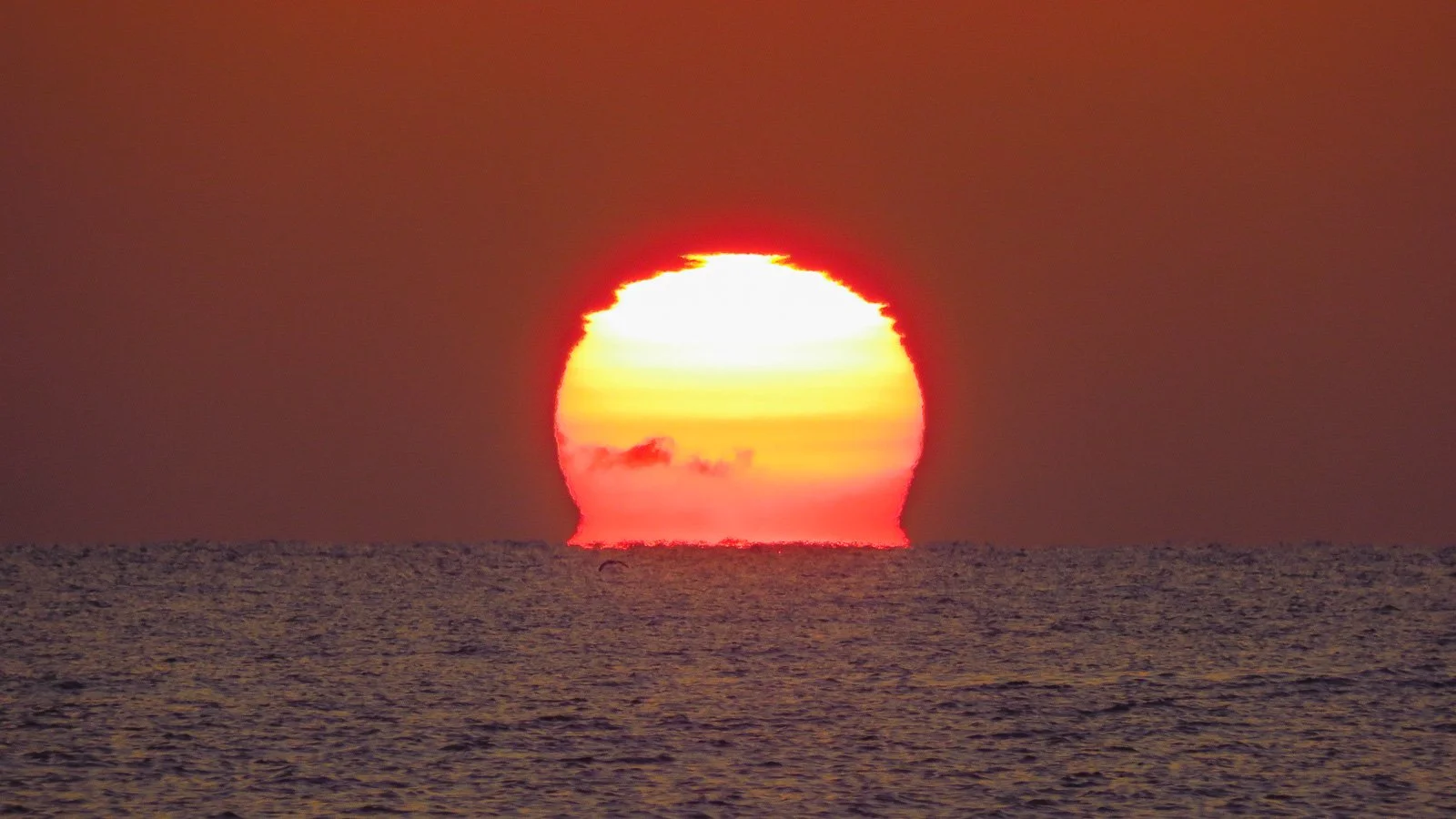
The sun appearing to bend due to refraction of light through layers of different air temperature. The shape of the sun can vary from resembling the Greek letter “omega” or even a square in some unusual cases. Mirages happen typically on the horizon then the sun tends to take on a more typical round shape as it rises higher in the sky. This atmospheric effect is not unique to the sun, it can happen to the moon and far away subjects as well.
Lenticular Clouds
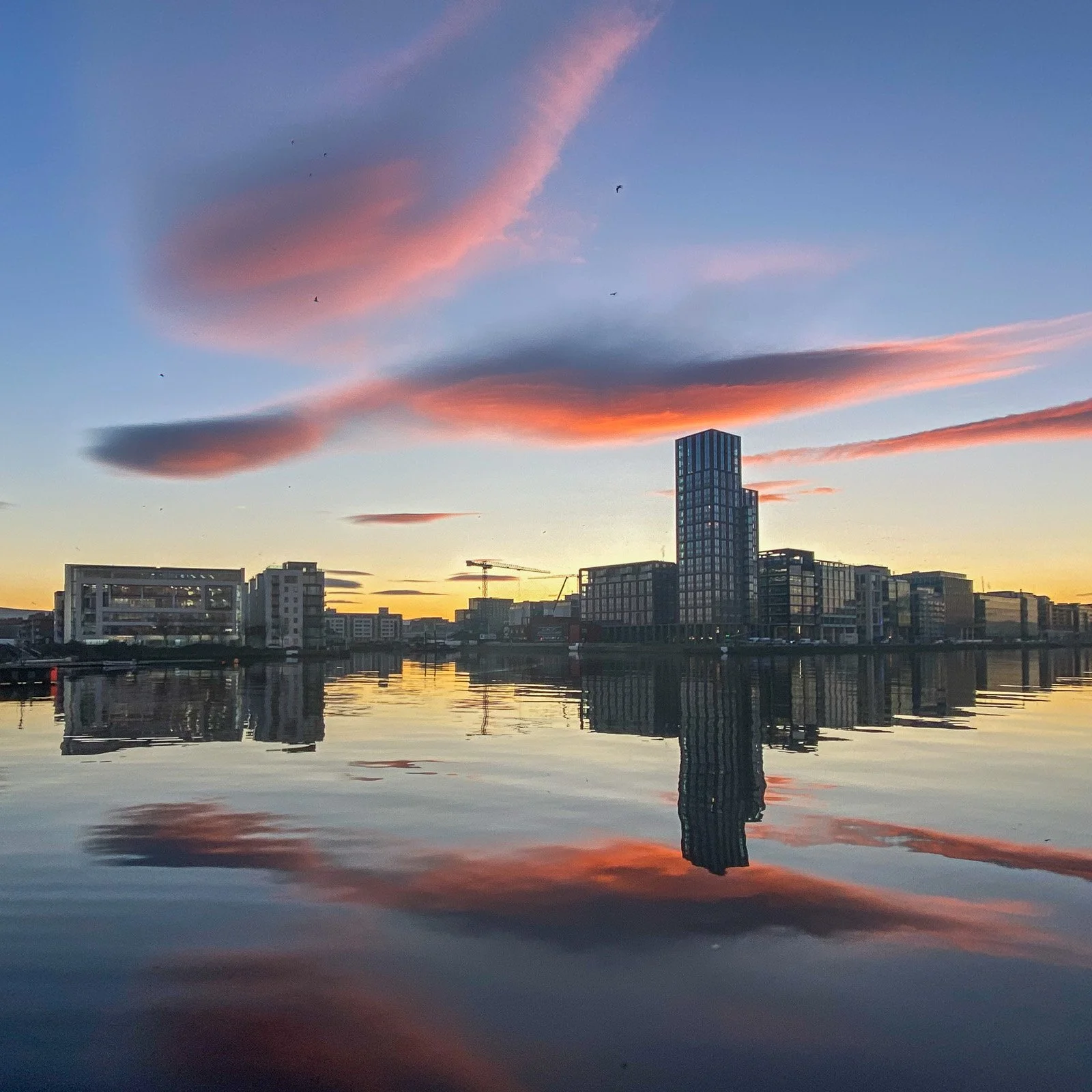
Clouds formed over or near mountains when moist air flows over them creating waves in the sky. The weather pattern required for their formation varies depending on the geography of the location. In Dublin, they tend to happen when the wind direction is southerly or southwesterly.
Crepuscular Rays
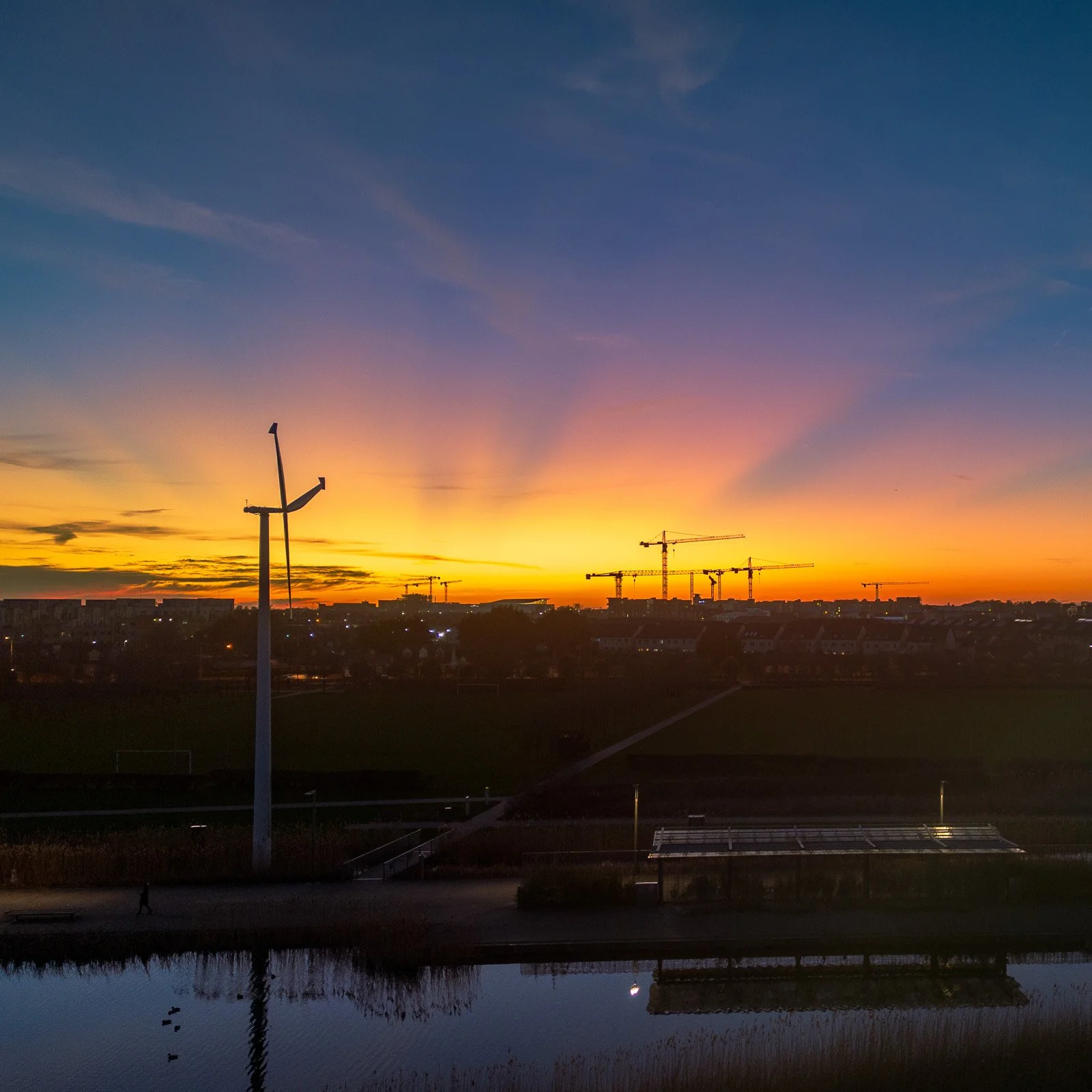
Beams of sunlight that appear either from gaps within cloud or when the sun is below the horizon. These rays may also appear on the opposite horizon but are called Anticrepuscular Rays, these tend to be fainter.
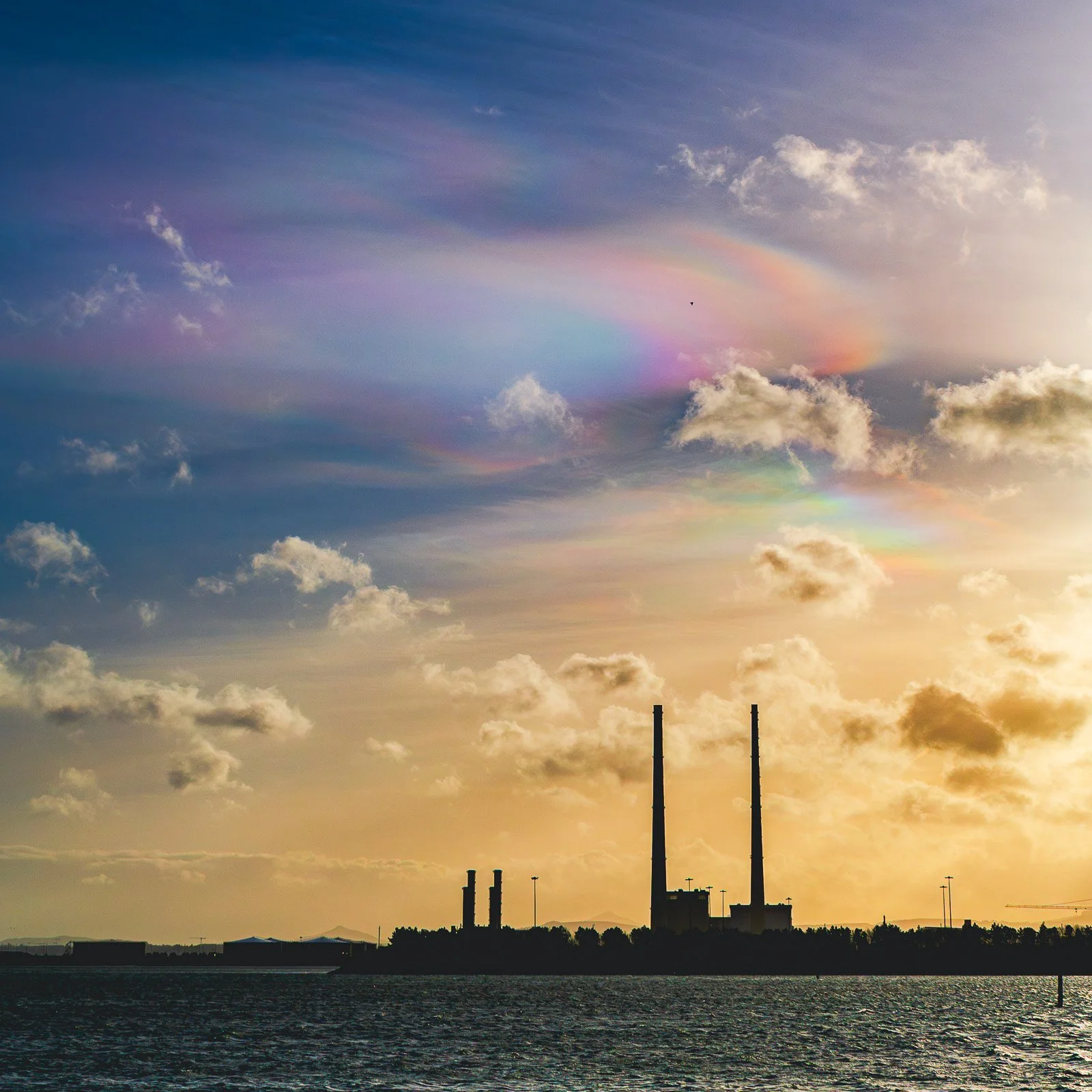
Nacreous Clouds
Also known as Polar Stratospheric Clouds or Mother of Pearl Clouds and not to be confused with the very similar looking Iridescent Clouds, are some of the rarest clouds which form in the lower stratosphere. They require extremely low temperatures to form of at least -78°C or lower. They tend to occur when a strong stratospheric polar vortex gets displaced over Ireland.
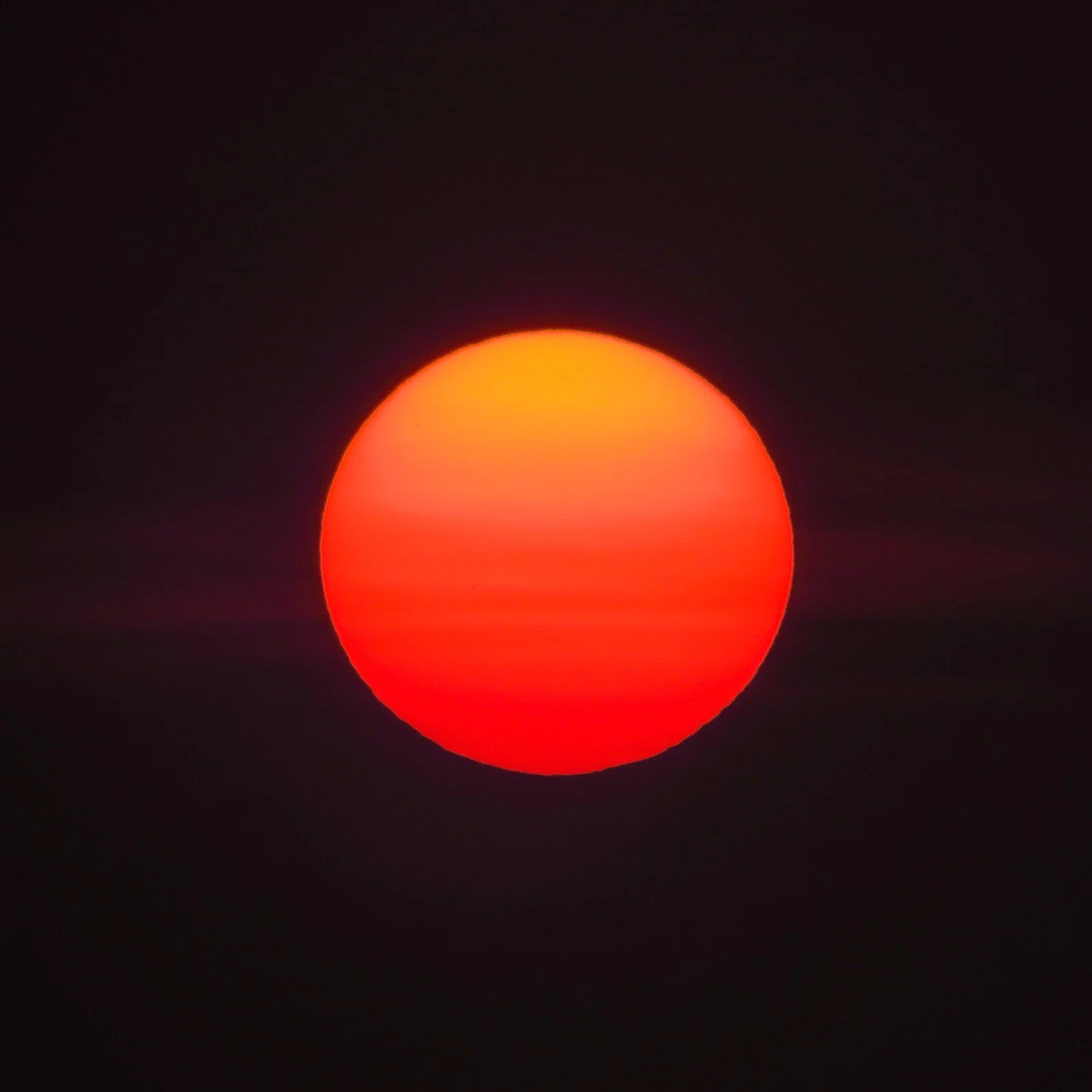
Hazy Sun
A muted sun that allows the human eye to see the sunspots without a filter and without blinding oneself. This is caused by atmospheric haze and dust. Wildfire smoke and fog may also lead to this effect. The extent of haze varies wildly day to day depending on the weather patterns and time of year. Hazy suns are most common in summer which is naturally hazier.
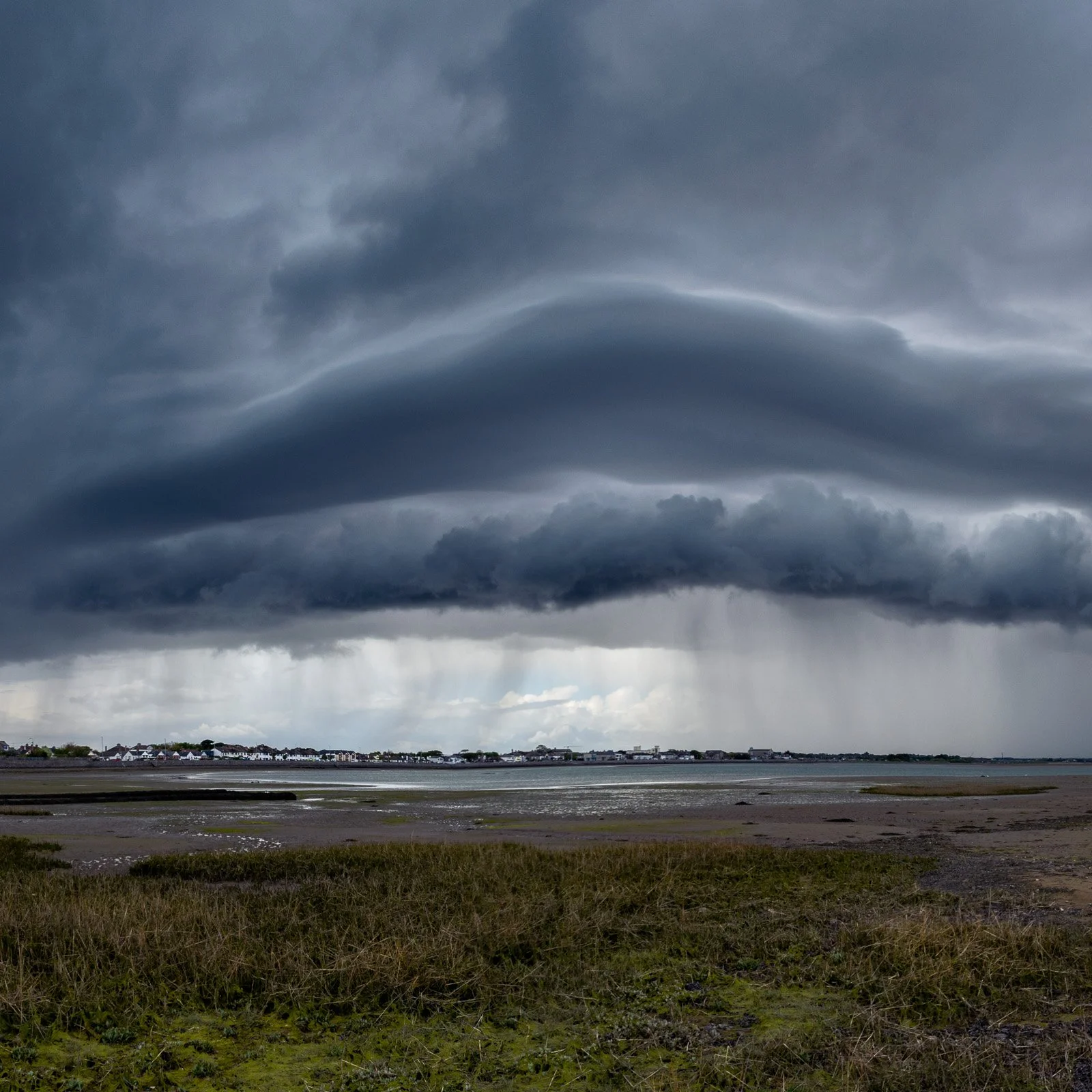
Shelf Cloud
A horizontal wedge shaped, dark cloud that forms on the leading edge of a thunderstorm or a heavy downpour. This is caused by cool air sinking meeting warm air forcing the warm air upward to condense creating this dramatic mood in the sky.
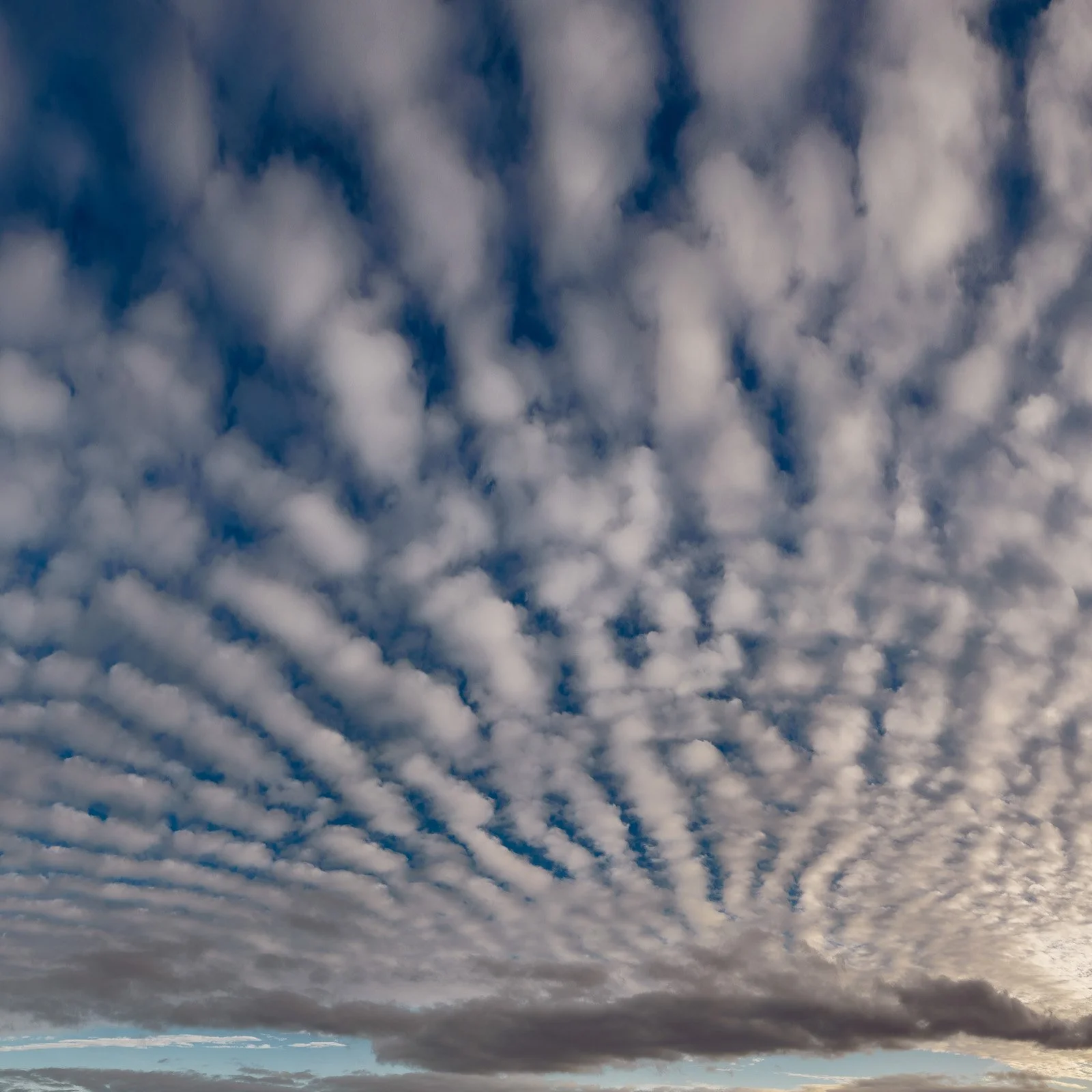
Mackerel Sky
Cirrocumulus and altocumulus clouds resembling the scales of a mackerel fish. It often precedes a change in the weather.
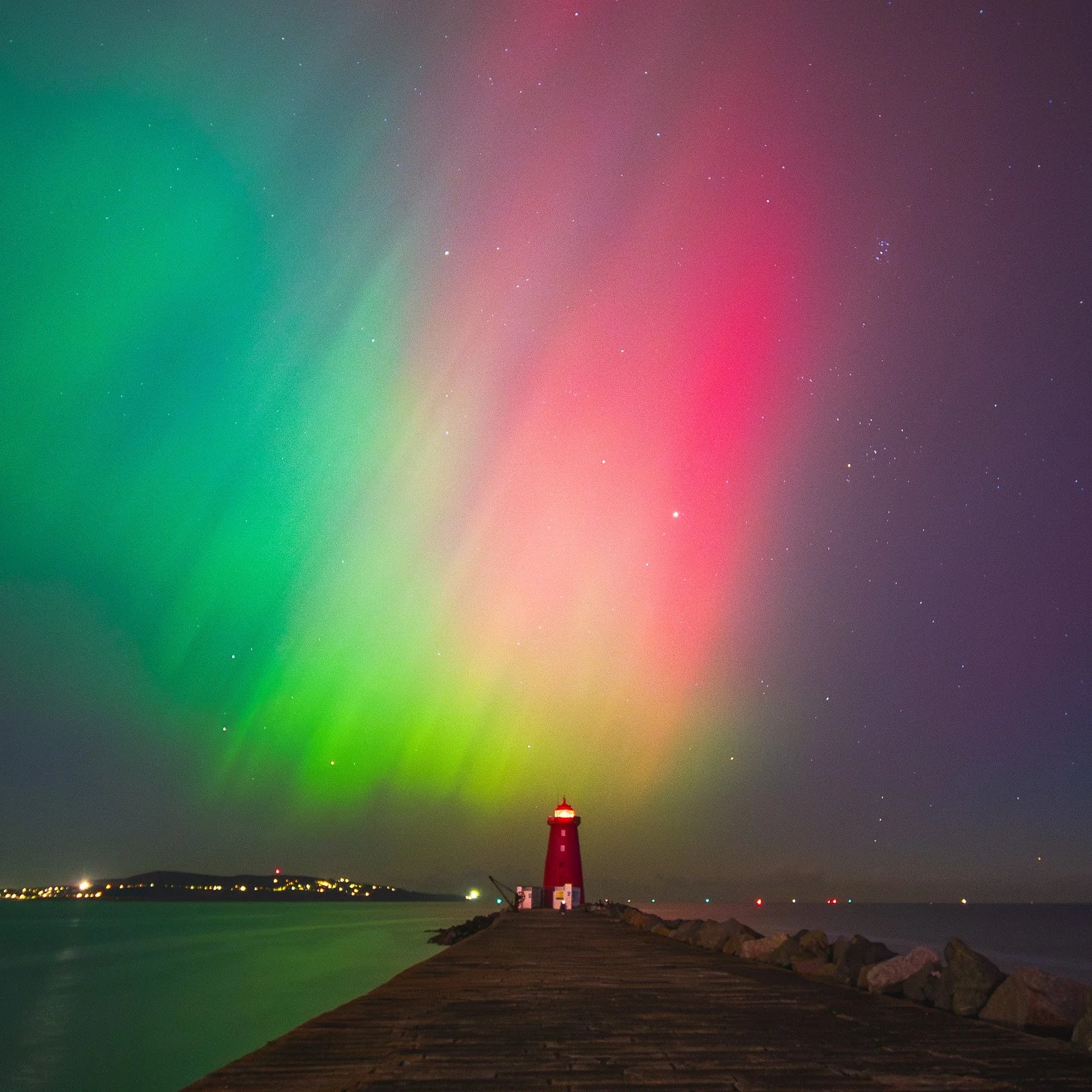
Aurora Borealis
A celestial dance in the sky commonly known as the Northern Lights. Auroras are caused by charged particles from the sun colliding with gases in the Earth’s atmosphere. Each colour is caused by a different gas collision. Ireland’s auroras tend to consist of a lot of red colours from a high concentration of high altitude oxygen during intense solar activity which is required to get aurora this far south.
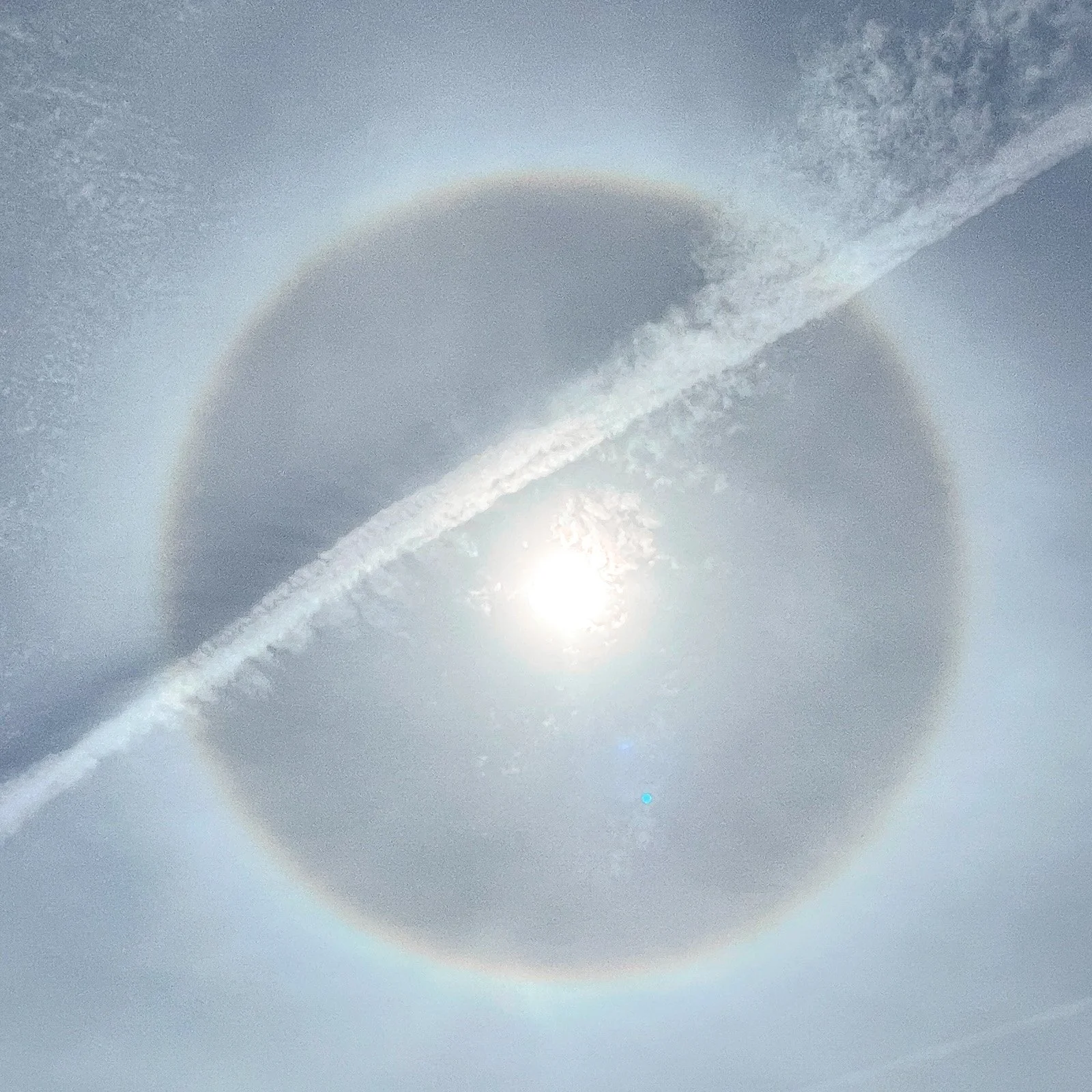
Solar Halo
A ring around the sun caused by sunlight refracting through ice crystals in high cloud such as cirrus. They are often a sign of the weather changing as high cloud from a weather front approaches from the west. A halo can also be visible around the moon but is rarer due to the brightness of the moon changing every day.
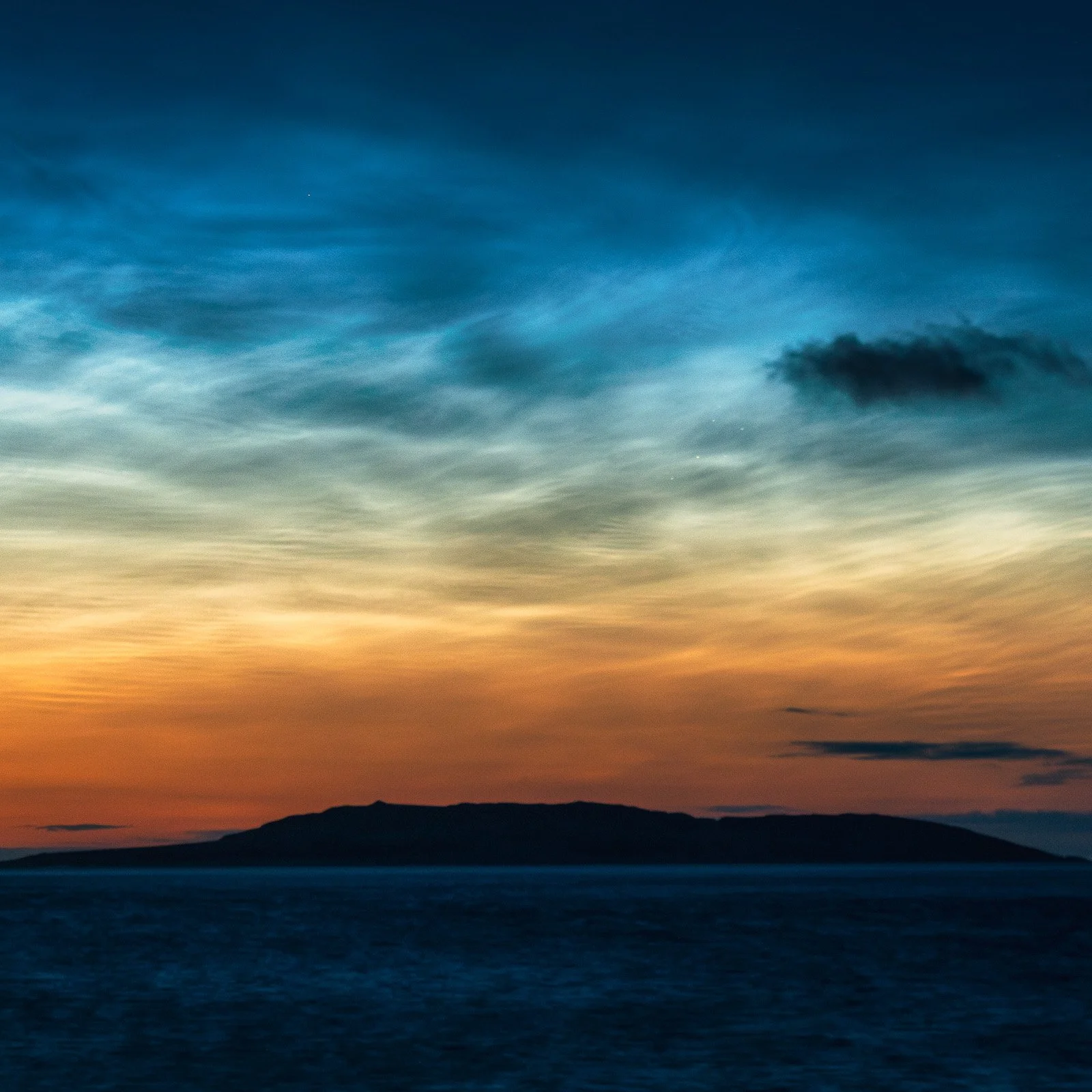
Noctilucent Clouds
Latin for night shining, noctilucent clouds are bright clouds that glow in the summer twilight sky between late May and early August. They are composed of ice crystals and form from water vapour condensing on meteor dust in the mesosphere making them the highest clouds in the sky. Normal clouds are grey at night whereas these appear white, blue or very rarely, red.
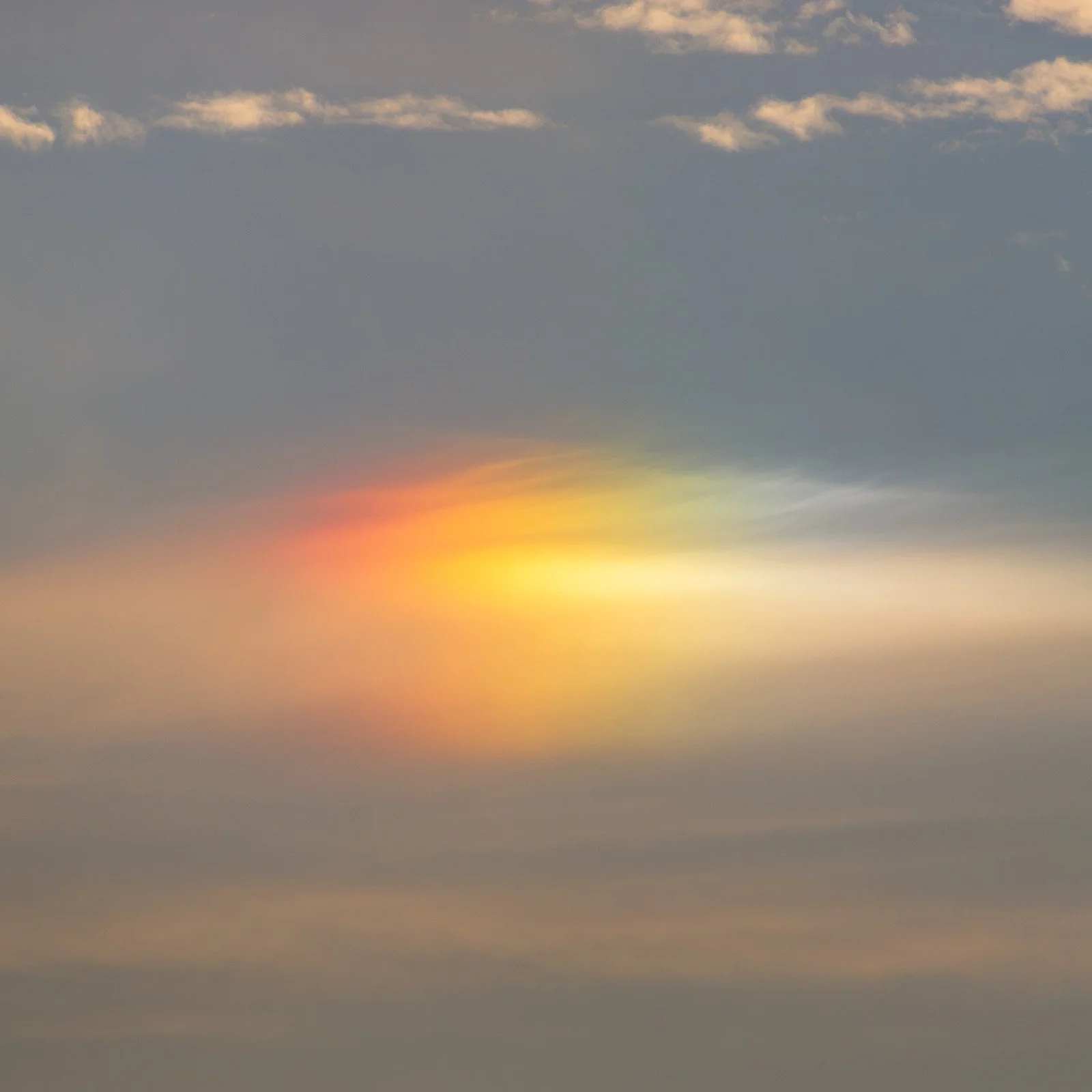
Sundog
Bright colourful spot of light right or left of the sun, often alongside a solar halo, which is formed by light refracting through hexagonal ice crystals in high cloud. This phenomenon may also be caused by moonlight.
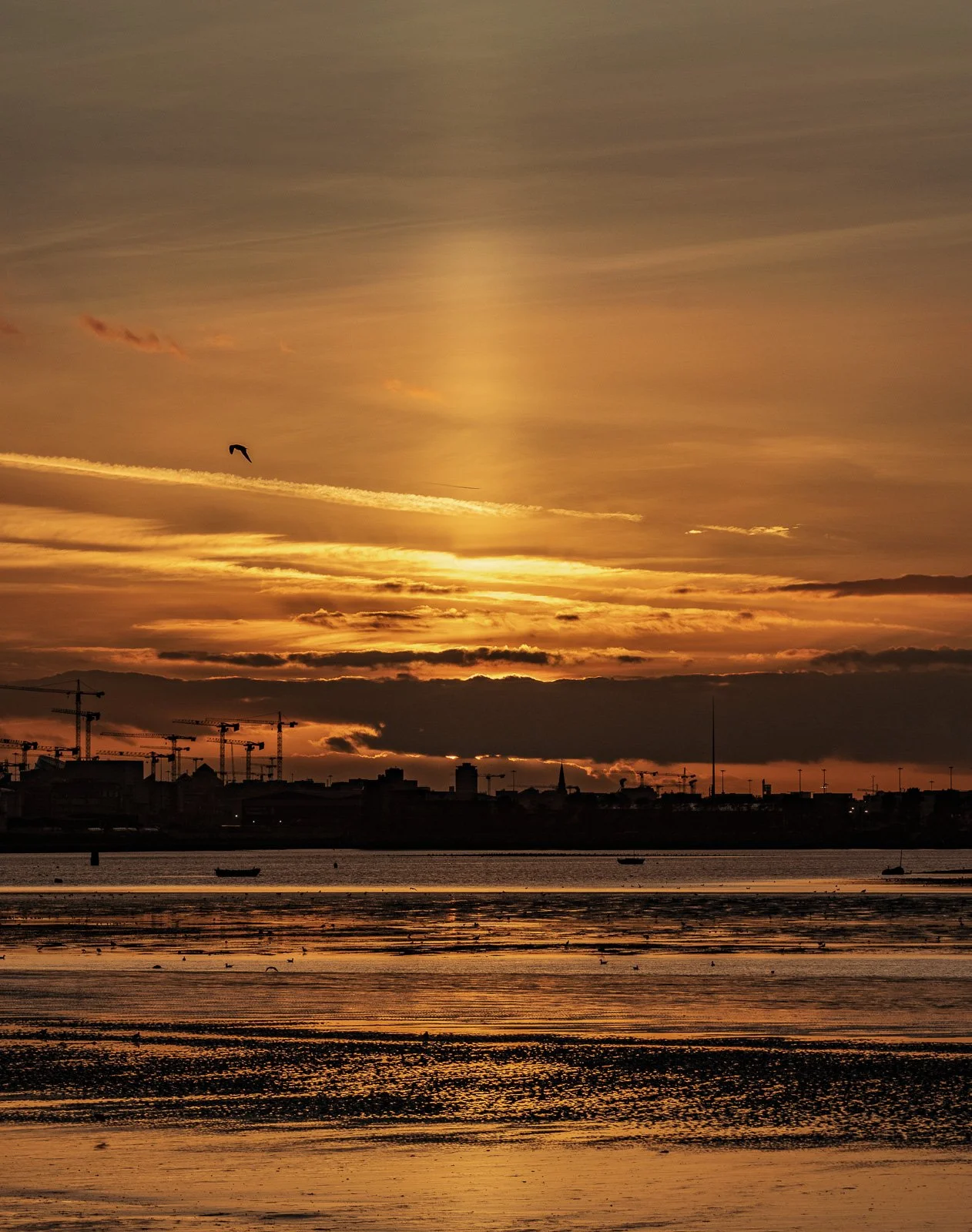
Light Pillar
A vertical beam of light caused by the reflection of light off a source such as the sun, moon and light pollution from tiny ice crystals that are suspended in the atmosphere or from high-altitude clouds. If the light causes from the sun, it is called a sun pillar and is the most frequently observed example of a light pillar.
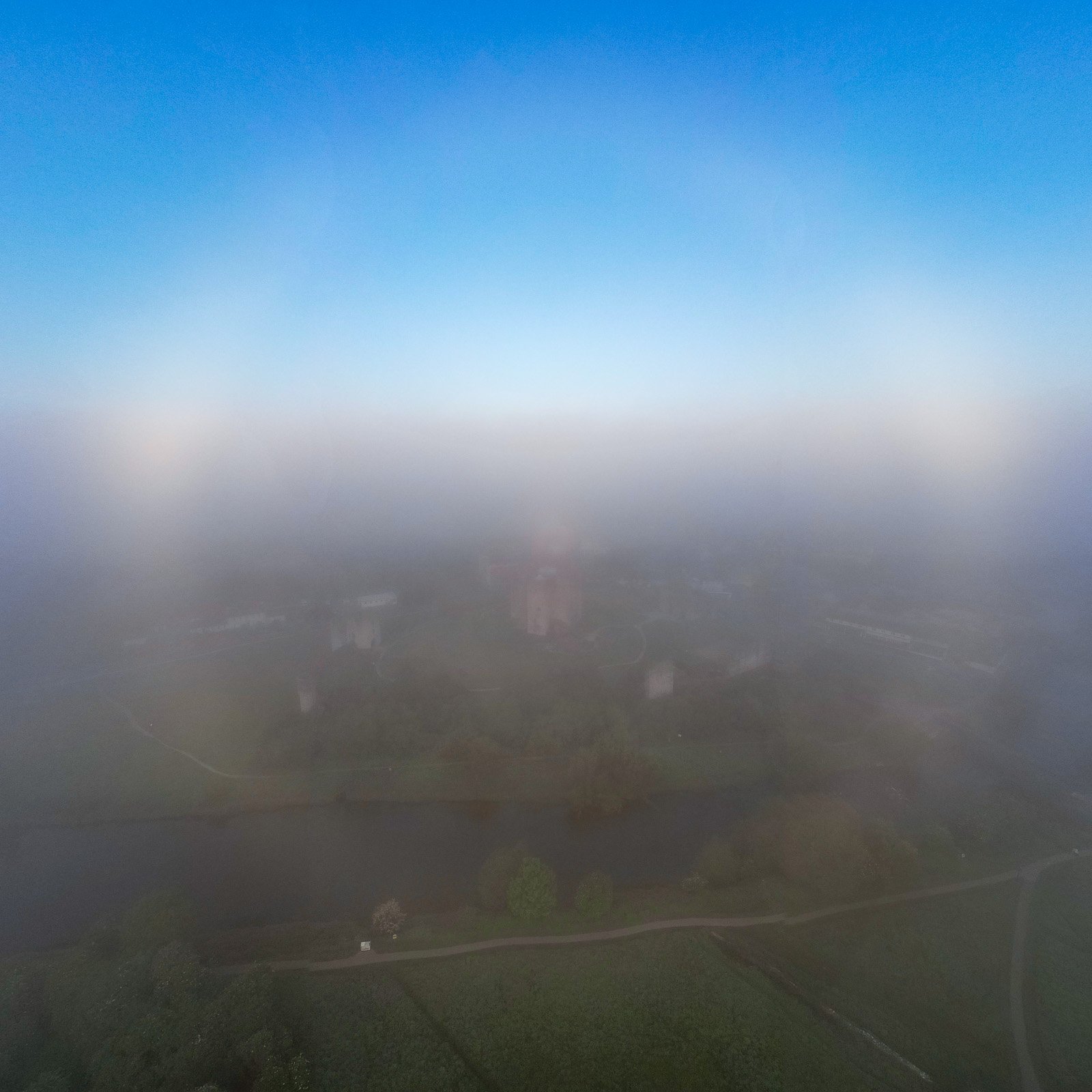
Fogbow
Similar physics to a rainbow, a fogbow is caused by light reflecting off of droplets in fog but takes on a bright white appearance instead of the spectrum of colours. Can be tricky to spot as it blends in to the thick fog but when you have light appearing through fog, remember to look the opposite direction and you might spot a fogbow. Did you know both the moon and sun can cause a fogbow?
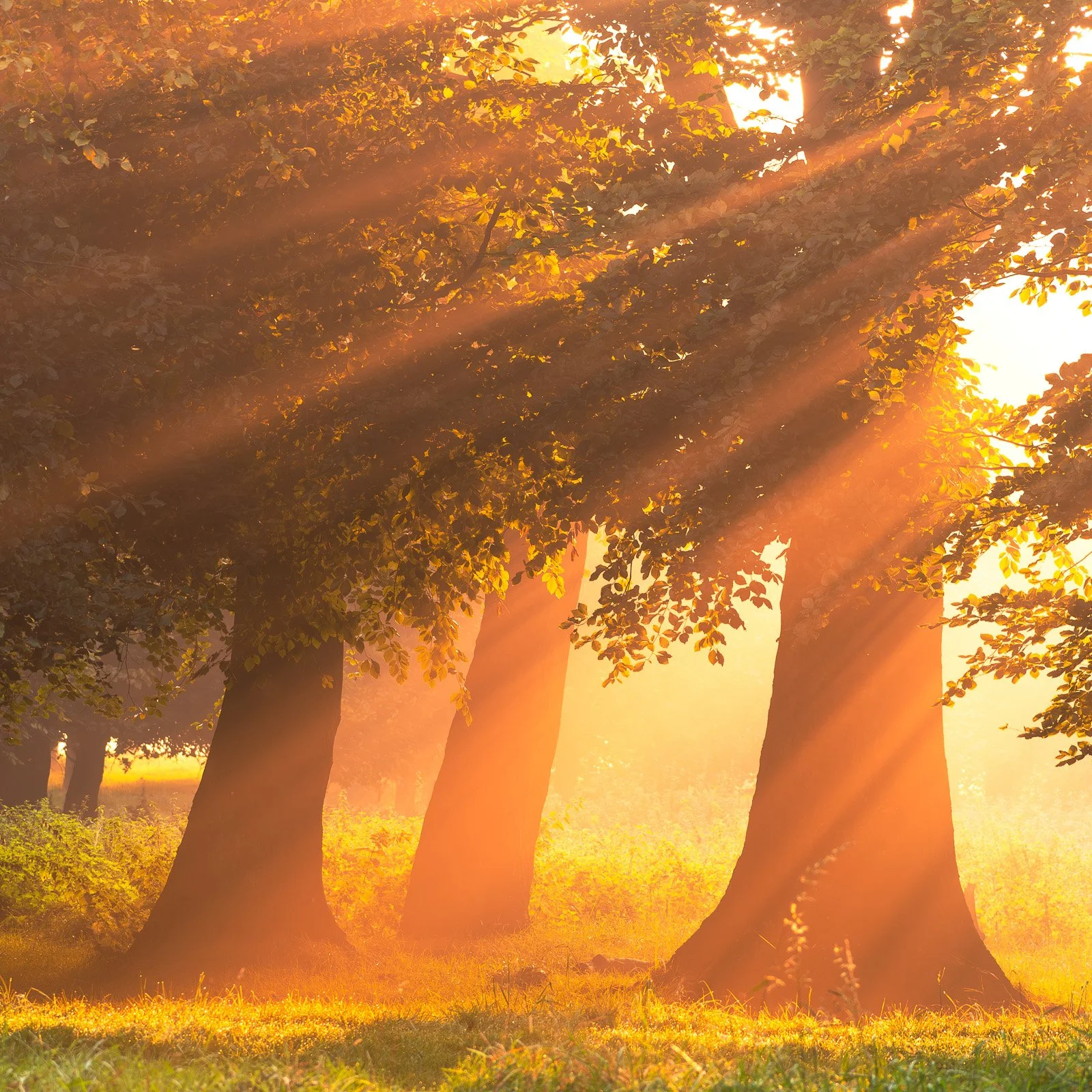
Komorebi
A Japanese word that describes sunlight being scattered through the trees, typically through thin or patchy layers of mist at its strongest but can happen in any weather conditions. General light sources may also cause komorebi at night.
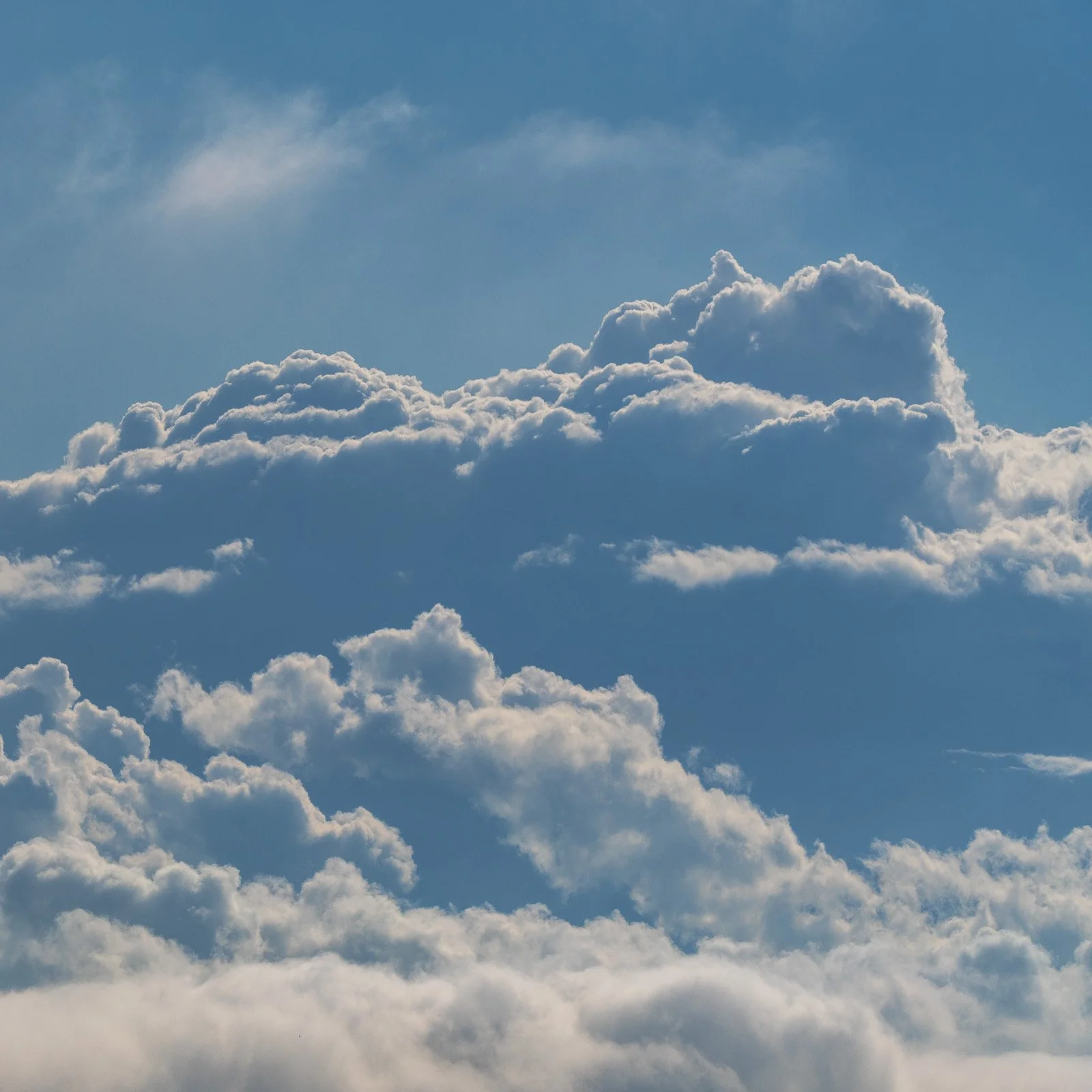
Cumulonimbus Clouds
Towering clouds formed from warm, moist air rising. Thunderstorms or heavy downpours often follow them. They can flatten at the top forming an anvil shape in the upper atmosphere.
Noctilucent Clouds types
The intensity of noctilucent clouds is referenced using the five point scale from type-I to type-V depending on how bright the clouds are. Some examples can be found below. This can change dramatically over the course of the same display.
Noctilucent clouds can also come in different shapes and formations. The basis of these types are illustrated in the diagram below. These can also be categorised into sub categories to classify very particular variations or shapes of the types.
Type-I veil don’t have much structure to them and take on the appearance of mist. Type II-bands can be very distinct and tend to be parallel to each other. Type-III waves take on as the name suggests a wave-like appearance like those you see on the coast. Type-IV whirls consist of clouds that loop or twist.